BCI Speller
A brain–computer-interface prototype exploring keyboard control through blink-related EEG signals and a web-based spelling interface.
Original project evidence
Explore the project.
01Receive and process+
The pipeline receives a BCI stream and cleans the signal before command detection.
02Broadcast commands+
The backend forwards actions to the browser over sockets.
03Operate the keyboard+
The web spelling interface responds to commands. The original repo also documents a simulated-input script.
Turning a signal into an interaction
BCI Speller explores operating a keyboard using commands derived from a brain–computer interface. The README describes blinking as an artifact visible in EEG signals, with a processing pipeline that passes commands through a backend to the web keyboard.
My contribution
The project's author credits list Marcin Matłacz for frontend/backend work, alongside collaborators responsible for data processing, design, and other frontend/backend contributions.
System structure
The documented workflow receives signals, processes and cleans them, detects commands, broadcasts actions, and updates the keyboard. The repository includes a web interface, sample recordings, and a script for simulating incoming data.
What the exhibit shows
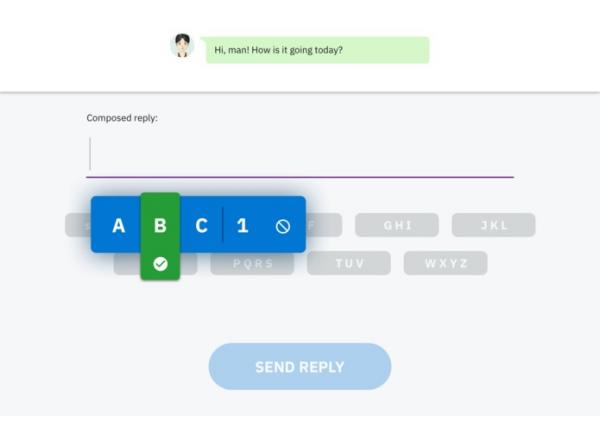
The image above is the original keyboard screenshot from the repository. The walkthrough describes the signal-to-interface path. It does not claim live EEG control, clinical validation, or measured assistive-device performance. A future interactive keyboard demo can use explicitly labelled simulated commands without requiring visitor hardware.
Recognition
- Winner of HackPrague — Brain-Computer Interface challenge — BR4IN.io, IEEE Brain, g.tec neurotechnology GmbH, Jun 2018